Previous

Season 1 - Episode 4

Next

Fixing Governance Gaps: Why the Three-Committee Board Structure Is Outdated

Show Notes

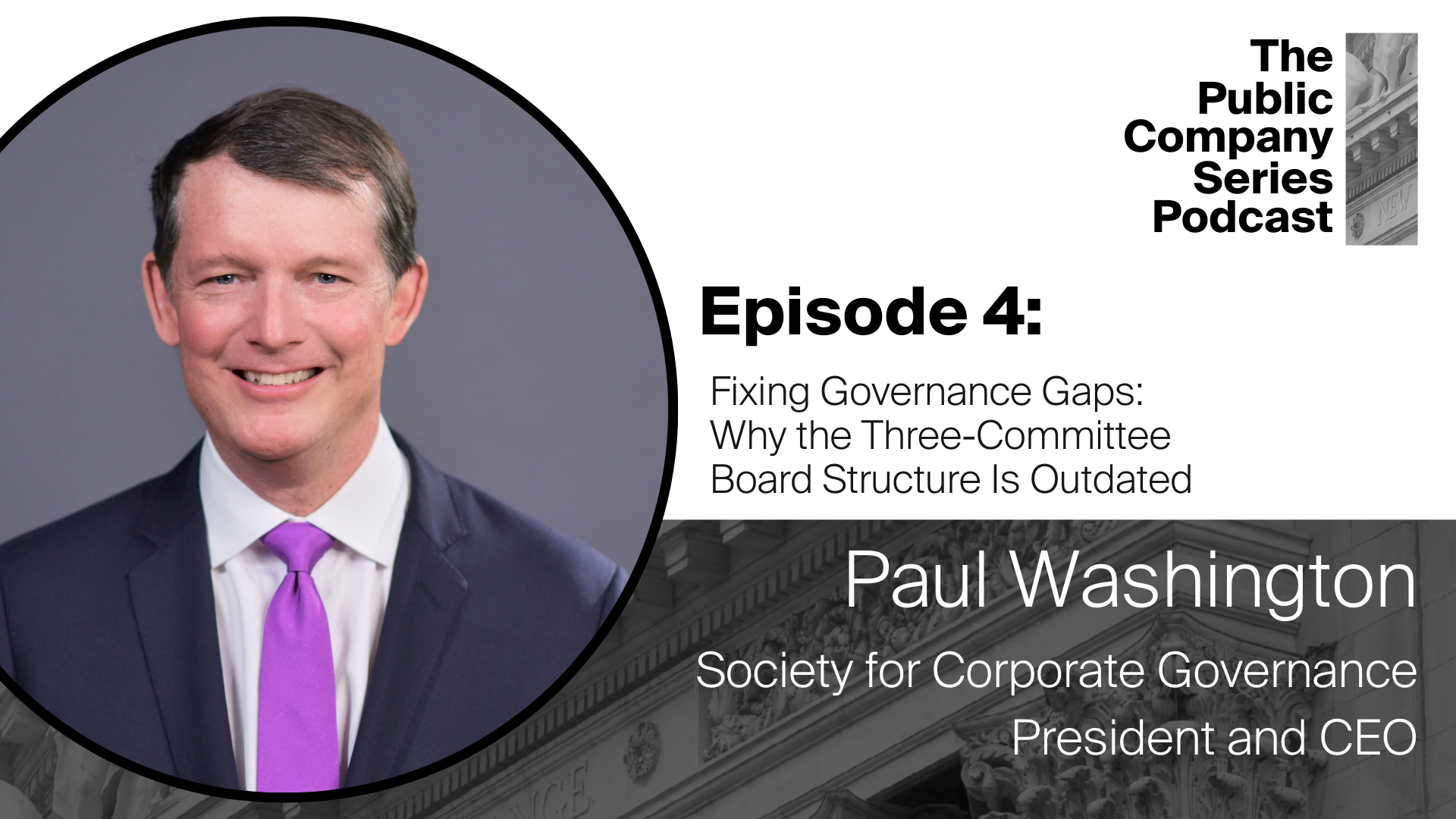
In this episode, Doug Chia sits down with Paul Washington, president and CEO of the Society for Corporate Governance, to explore how public company board committees ended up with the familiar Audit, Compensation, and Nominating & Governance structure and why that structure may no longer match the demands boards face today. Paul explains how the post-Enron regulatory environment solidified the three-committee model and why simply handing emerging issues to existing committees is creating frustration for both boards and management. Together, Doug and Paul walk through the gaps left by the current structure and outline a practical, step-by-step process to reassess what work is done where. They discuss how clarifying committee responsibilities can streamline board agendas, strengthen oversight, and improve alignment with management. The conversation offers concrete guidance for governance professionals seeking to optimize committee workload, sharpen accountability, and ensure the board is adding value in the right places.

Highlights

  • [00:40] Meet the guest: Paul Washington
  • [01:00] Why the three-committee structure may be outdated
  • [03:20] Why independent directors became central to committee design
  • [04:20] Major gaps in committee responsibilities under current listing standards
  • [08:30] Integrating stakeholders’ perspectives into the decision making process
  • [12:30] Focusing on opportunities, not just risk
  • [15:40] Blended committees: maximizing the value of the board
  • [17:10] Are boards today overwhelmed by monitoring responsibilities?
  • [21:20] The five-step framework for thinking and redesigning committee structure
  • [23:40] Considering how the board and committees can add value
  • [32:00] Why board committees are still treated strictly as monitoring bodies
  • [35:00] Why do boards resist the idea of creating new committees
  • [41:00] Companies with more than three committees
  • [42:50] Analyzing the value of a committee
  • [44:20] The public policy committee
  • [46:20] Closing thoughts