

Previous

Season 1 - Episode 10

Next

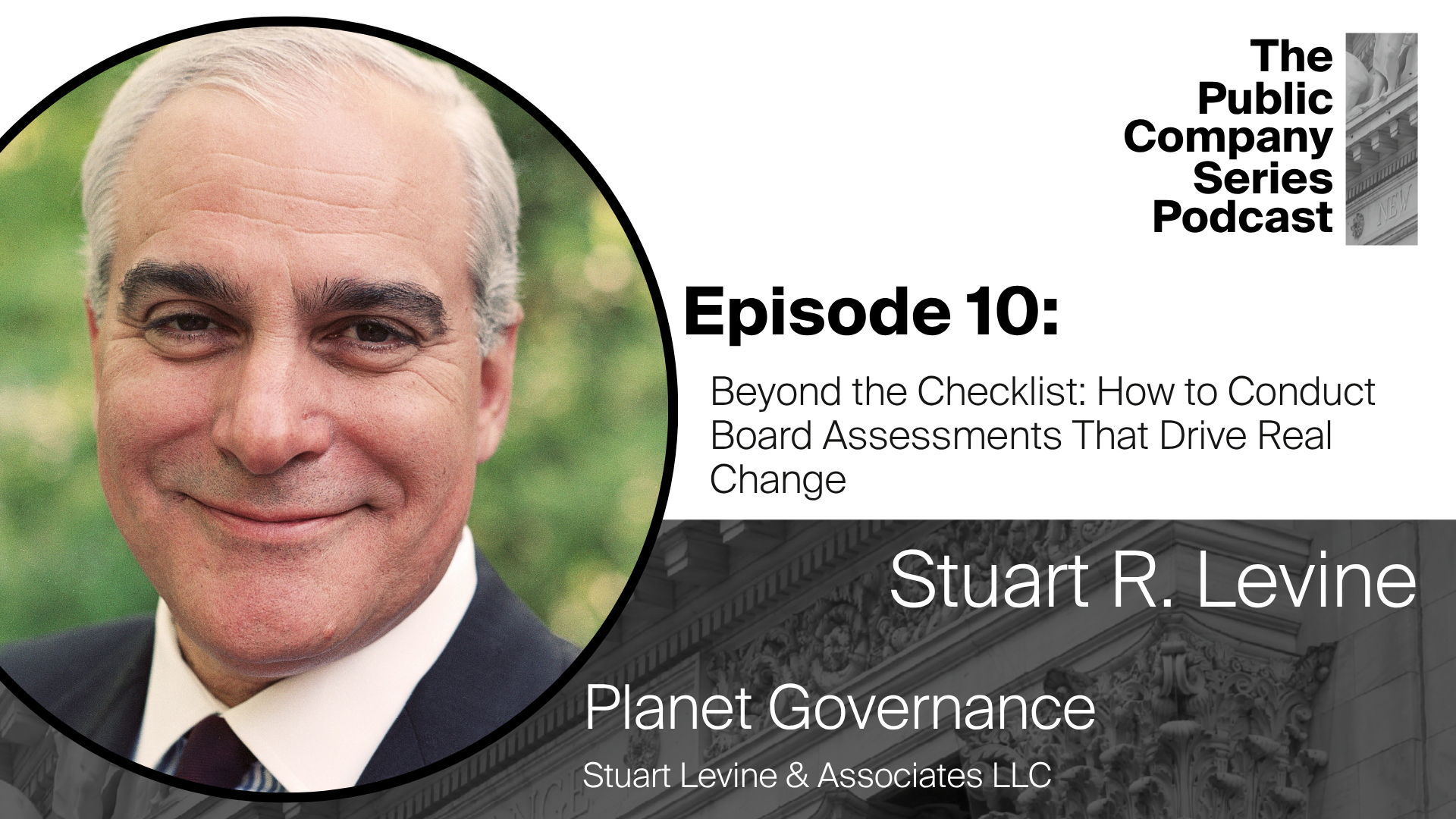
Beyond the Checklist: How to Conduct Board Assessments That Drive Real Change

Show Notes

Board assessments have evolved from routine, check-the-box exercises into critical tools for improving performance, strengthening culture, and identifying hidden risks. In this conversation, Stuart R. Levine shares how effective evaluations balance quantitative rigor with qualitative insight, uncovering the nuances that surveys alone often miss. He explains why confidentiality and independence are essential to building trust and eliciting honest feedback from directors. The discussion explores emerging trends, including individual director evaluations, the role of external facilitators, and the increasing importance of board culture in a rapidly changing environment. Through real-world examples, Stuart highlights how thoughtful assessments can reveal subtle inefficiencies, improve collaboration with management, and ultimately enhance a board’s strategic impact. What you'll learn: • How to move beyond superficial "check-the-box" surveys by blending quantitative data with qualitative interviews to uncover hidden board nuances. • The strategic value of incorporating feedback from top management to identify trust blockages and align the board with executive leadership. • Practical ways to build "governance plumbing" using dashboards that track cultural indicators like employee turnover and satisfaction. • Why choosing an external facilitator with deep experience is essential for navigating the speed of global change and sensitive director evaluations. • How to identify high-performing directors by looking for rigorous preparation, punctuality, and a proactive commitment to continuous learning.

Highlights

  • [00:40] Meet the guest: Stuart R. Levine
  • [01:00] Setting the context: Enhancing board performance and through deliberate self-assessments
  • [02:40] Balancing the science and the art of board assessment
  • [05:00] Moving beyond superficial check-the-box exercises
  • [08:00] Emerging trends in the evaluation of individual director performance
  • [14:30] Evolution of one-on-one confidential interviews as a mentoring tool
  • [17:20] Advantages of independent external facilitators
  • [22:20] Managing proxy disclosures regarding the assessment process
  • [28:40] Applying professional governance principles to private and family-owned businesses
  • [34:30] Strategic criteria for selecting experienced board facilitators
  • [45:50] Measuring and evaluating board and corporate culture
  • [58:00] Assessing director character, preparation, and professional accountability
  • [62:40] Presentation and handling of privileged evaluation reports
  • [66:00] Navigating sensitive findings and using results to drive future strategic support